“Robotics is a technological link aimed at improving people’s lives”
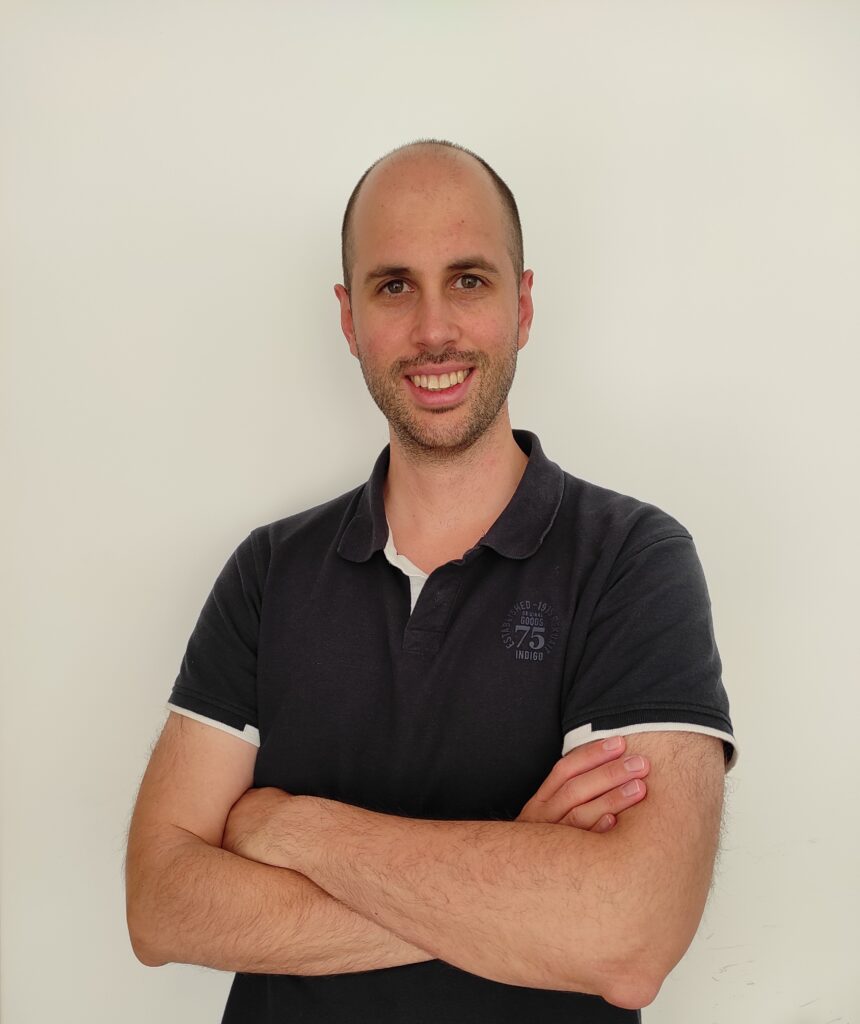
Alejandro Rodríguez Barroso (Castellón, 1989) holds a degree in Industrial Engineering (specialising in Electronics and Automation) and a PhD in Automation and Robotics, both from the Polytechnic University of Madrid. He currently leads the Remote Handling & Hot Cells Unit.
– QUESTION (Q): At the latest I+DONES Forum, we featured a humanoid robot that captivated attendees. Beyond appearing in viral videos and photos at events, what attracted you to robotics and led you to specialise in this field?
– ANSWER (A): I would say it was precisely that same phenomenon that guided me through the different branches of engineering until I ultimately focused on robotics. However, beyond the spectacular nature of these machines -which continue to surprise us year after year by pushing the boundaries of what we thought was possible- what is most rewarding for those of us working in this field is being able to quickly and directly see that all the prior development work has paid off.
Every time we see a humanoid performing some of the tasks you mention, multiple equations from different areas of knowledge are being solved internally accurately and in a synchronised way. For example: assessing the environment through cameras and sensors, maintaining dynamic balance, deciding how to execute movements, and coordinating actuators, among others.
This direct connection between mathematical models and the real world, with robotics acting as a bridge, makes it easier for countless applications to emerge—addressing both current and future challenges. The main driver of this process is the rapid progress in science and technology that supports the discipline, along with the growing trust placed in robotics in recent decades as a tool to tackle increasingly complex challenges.
– Q: What will the robots working at IFMIF-DONES be like? What tasks will they perform?
– A: At IFMIF-DONES, robots are primarily designed to carry out maintenance tasks in areas where human access is restricted or limited, mainly due to residual radiation levels in some plant components. As a result, their key feature is teleoperation, the ability for one or more human operators to control them remotely from a safe location, using cameras and sensors to monitor their performance.
Because these robots must withstand certain levels of radiation, their components, especially electronics, must be designed accordingly. In addition, in the event of failure, they must be capable of returning to safe areas either autonomously or with assistance from other robots, eliminating the need for direct human intervention and ensuring full operational safety.
Remote maintenance tasks at IFMIF-DONES are diverse: replacing components of the accelerator or lithium system, conducting preventive inspections, handling experimental modules, opening shielding, and more. Given the wide range of operations, the facility will rely on multiple types of robotic systems tailored to each task: cranes, robotic arms, humanoids, parallel platforms, vision systems, autonomous vehicles, specialized tools, anchoring systems, virtual reality systems, and digital twins.
– Q: The importance of robotics in industry is not a passing trend but a structural transformation reshaping how we produce, work, and compete globally. What message would you share with society about its short-term importance?
– A: In the 1960s, robots began supporting human operators in tasks requiring speed and precision, as well as in hazardous environments like industrial foundries. Following the success of early industrial robotics in optimising processes, the technology evolved to the point where society began to rely on robotics to address new challenges that had previously been unmanageable.
Today, there is growing evidence-based confidence in the ability of robotic systems to operate in restricted environments. We see robots working not only in industrial settings but also on the surface of Mars and deep underwater. In terms of scale, they range from nanorobots for medical applications to massive robotic systems used in radio telescopes.
As robotics continues to permeate so many aspects of our lives and tackle increasingly complex challenges, I see it as a fundamental technological link whose ultimate goal is to improve people’s quality of life.
– Q: Your expertise in robotics will be applied at the micro scale, particularly in biomedical, environmental, and smart materials applications. Are humanoid robots fundamental to human progress?
– A: As mentioned earlier, behind every robot performing a task, there is a set of equations and algorithms determining what it should do in the next microseconds. These systems rely on concepts such as computer vision, actuator control, proprioception, decision-making, and motion strategy. All of these are based on shared mathematical and physical principles applicable to a wide range of robotic systems—and even to human biomechanics.
This is why cross-disciplinary experience is so valuable. For example, we better understand how to stabilize dynamic systems thanks to developments in drones; micro-robots have shown us the importance of cooperation; underwater robots have improved our understanding of visibility and localization in extreme environments; and surgical robotics has advanced precision telemanipulation.
All these advancements are applied in remote maintenance, where humanoid robots, among other systems, play a key role because they replicate the physical structure of human operators.
Looking ahead, future designs may move beyond anthropocentric models toward more task-oriented configurations, for example, robots with additional specialised arms or extensions to reach high-radiation areas or to position sensors and cameras more effectively.
– Q: At IFMIF-DONES, robotics is part of a multidisciplinary ecosystem. Do you feel comfortable in such a diverse professional environment?
– A: I would say there is never enough diversity when tackling complex technological challenges. Each specialist approaches problems differently based on their background and perspective. This diversity is essential at IFMIF-DONES due to the interdisciplinary nature of the project: physics, materials science, engineering, mathematics, administration, integration, and more.
At the same time, this coexistence fosters new ways of thinking, continuous learning, and the search for more effective solutions to support the project.
– Q: One of your wishes is “the emergence of a serendipitous discovery that leads to a new branch of science.”
– A: It is certainly an ambitious wish. By definition, it is impossible to predict where such discoveries might arise. However, as has happened throughout history, I hope that at some point a new physical phenomenon or technological challenge will emerge that requires a new scientific paradigm, or at least forces us to rethink our current approaches.
While examples like penicillin, X-rays, or microwave heating come to mind, even in modern robotics, we have seen cases where unexpected prototype behaviour led to the development of new mathematical models. That kind of breakthrough is always possible.