IFMIF-DONES successfully conducts its first particle detector testing campaign
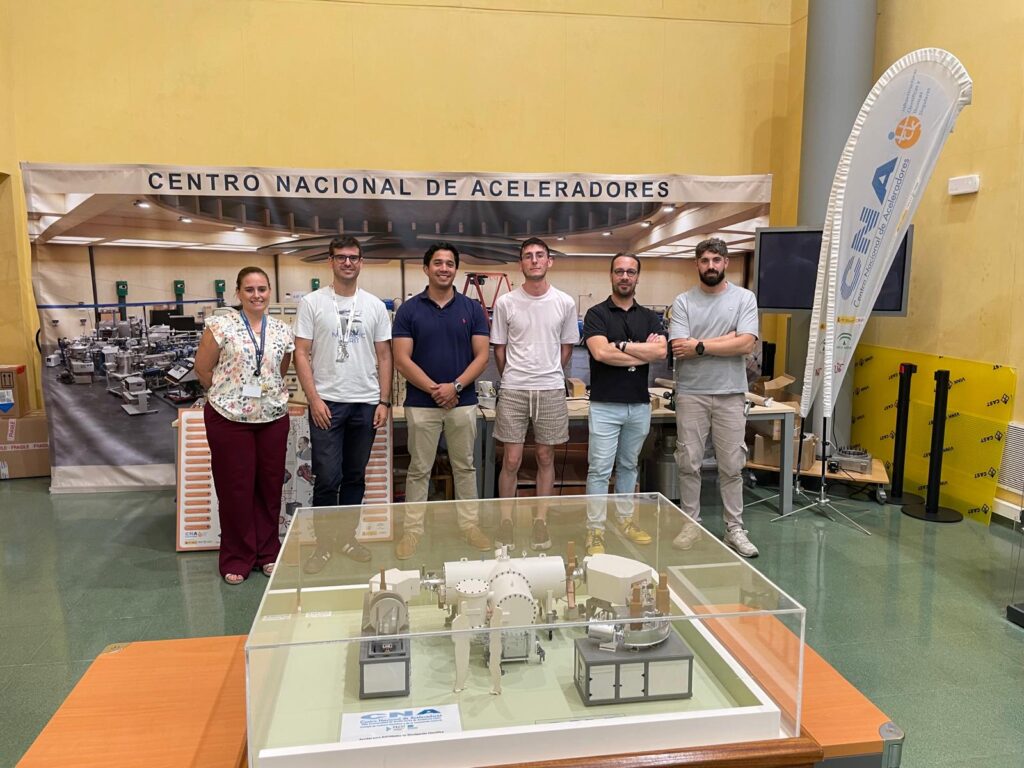
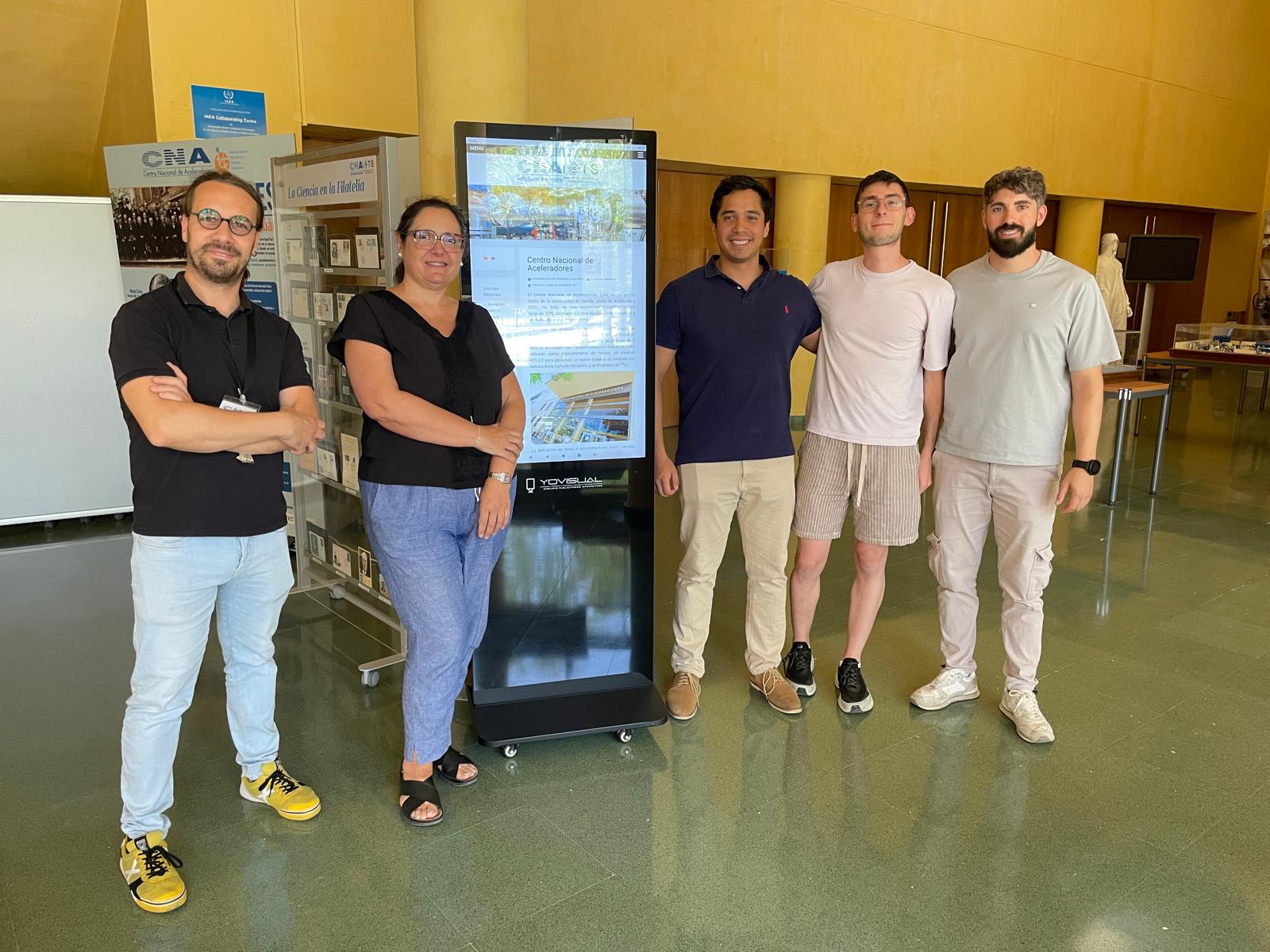
A team from IFMIF-DONES travelled to the National Accelerator Centre (CNA) in Seville to carry out a key experimental campaign aimed at validating particle detectors under conditions representative of those expected in the future facility.
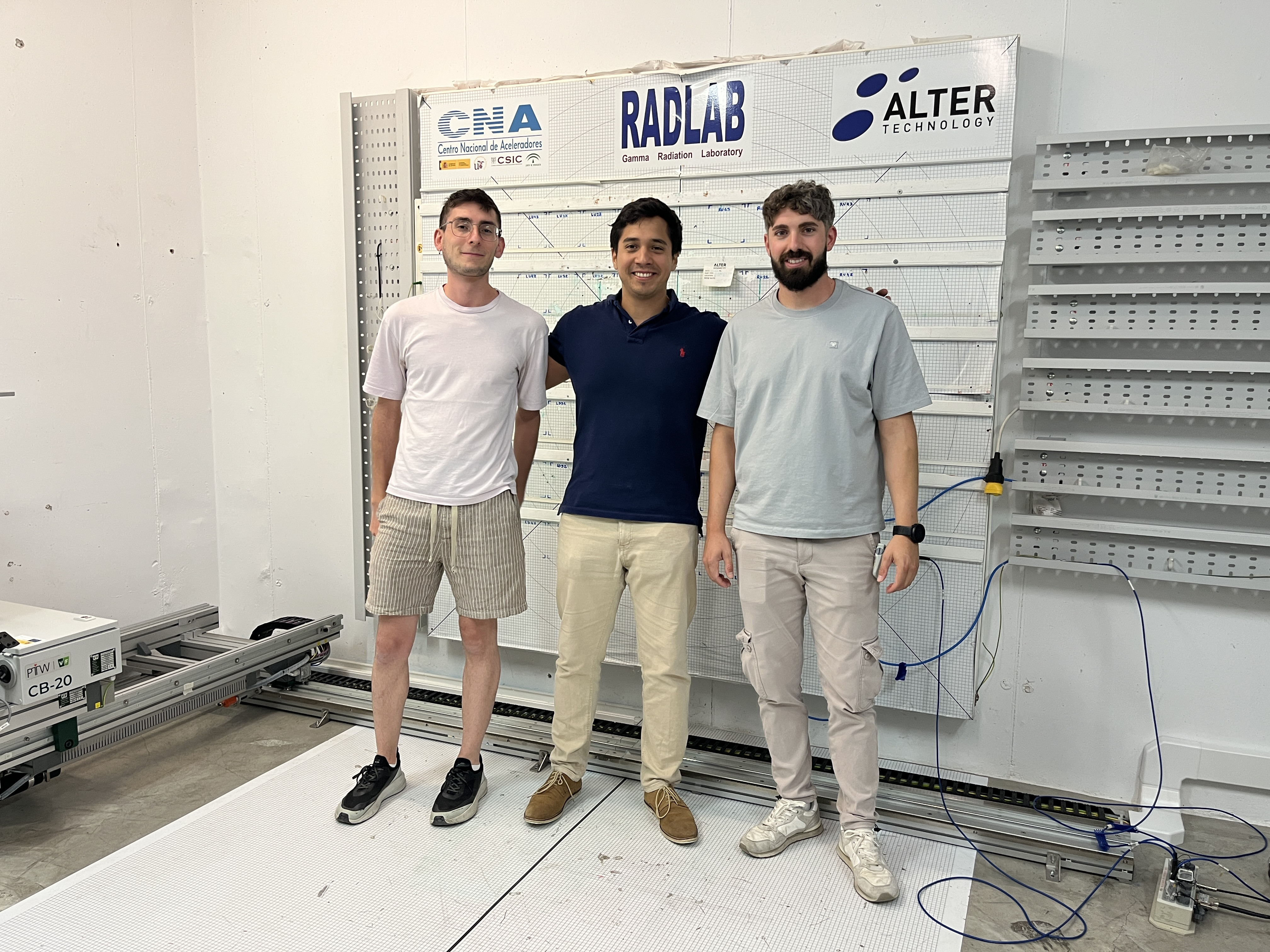
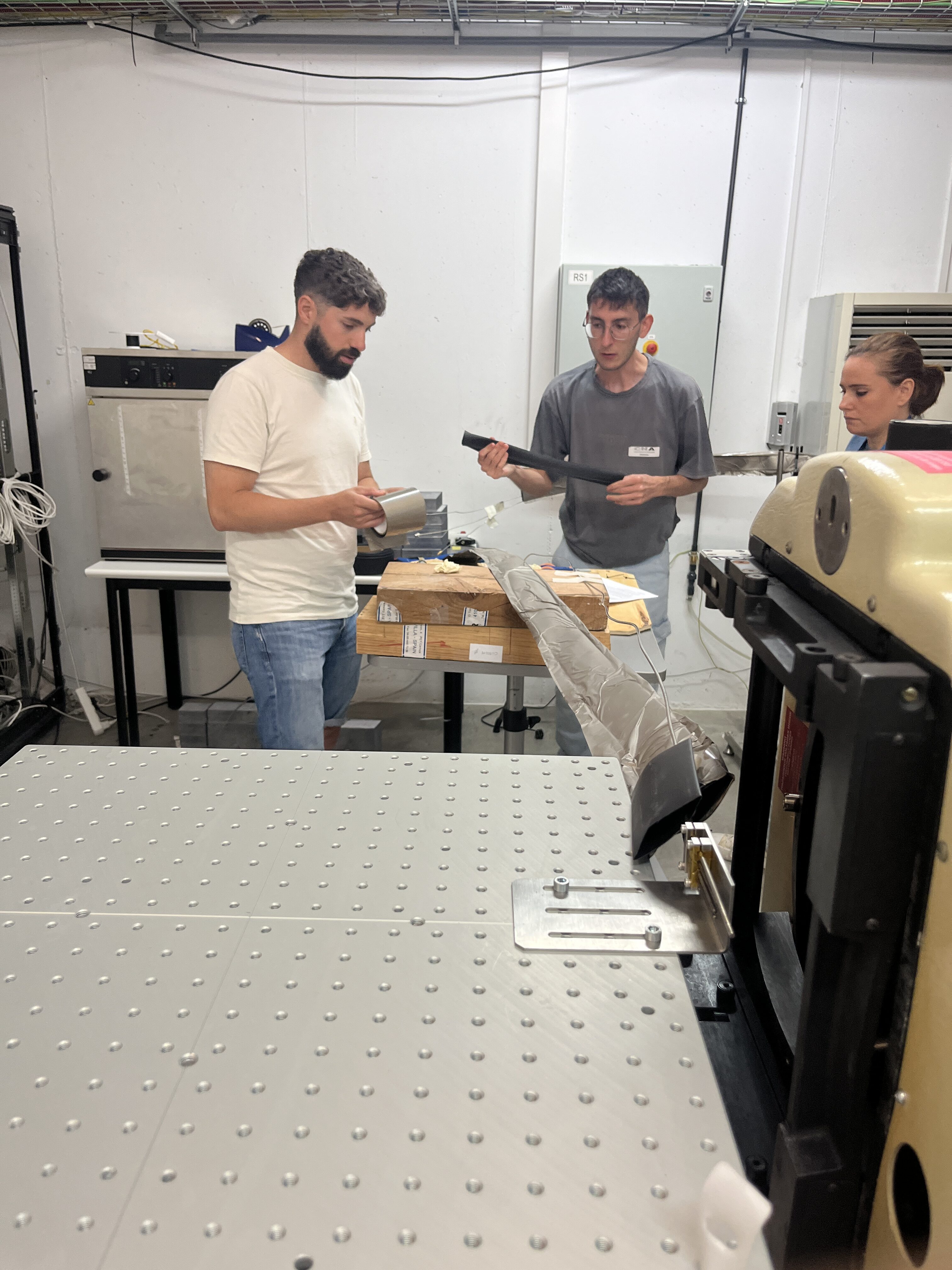
From 8 to 10 July, IFMIF-DONES researchers conducted a series of irradiation tests at the National Accelerator Centre (CNA) in Seville to assess the behaviour of several particle detectors when exposed to gamma radiation. The campaign was carried out by Pablo Araya, Gonzalo Martín e Isidoro Ruiz, who transported a number of detectors previously installed in the STUMM-PROTO experimental facility.
The tests were performed using gamma radiation generated by the decay of Cobalt-60, taking advantage of the CNA’s specialised cobalt irradiator. This campaign represents the first gamma irradiation ever performed on the detectors currently operating in STUMM-PROTO, enabling researchers to evaluate their response to photon energies close to those expected in the future IFMIF-DONES environment.
To ensure that the results accurately reflect real operating conditions, the team replicated in Seville the same signal transmission configuration used in STUMM-PROTO. The experimental set-up included a 35-metre mineral-insulated cable transmission line, equivalent to the one planned for use in IFMIF-DONES.
This experimental campaign marks an important milestone in the technological validation of the instrumentation and detection systems associated with the project. The data obtained will provide valuable information on the performance of the detectors in radiation environments and will contribute to improving the reliability and optimisation of future system designs.
The collaboration with the National Accelerator Centre also highlights the synergies between leading Spanish scientific infrastructures and underlines the importance of specialised facilities for the development and validation of advanced technologies that support fusion energy research.