“We are creating an interconnected ecosystem that contributes to fulfilling IFMIF-DONES’ scientific mission”
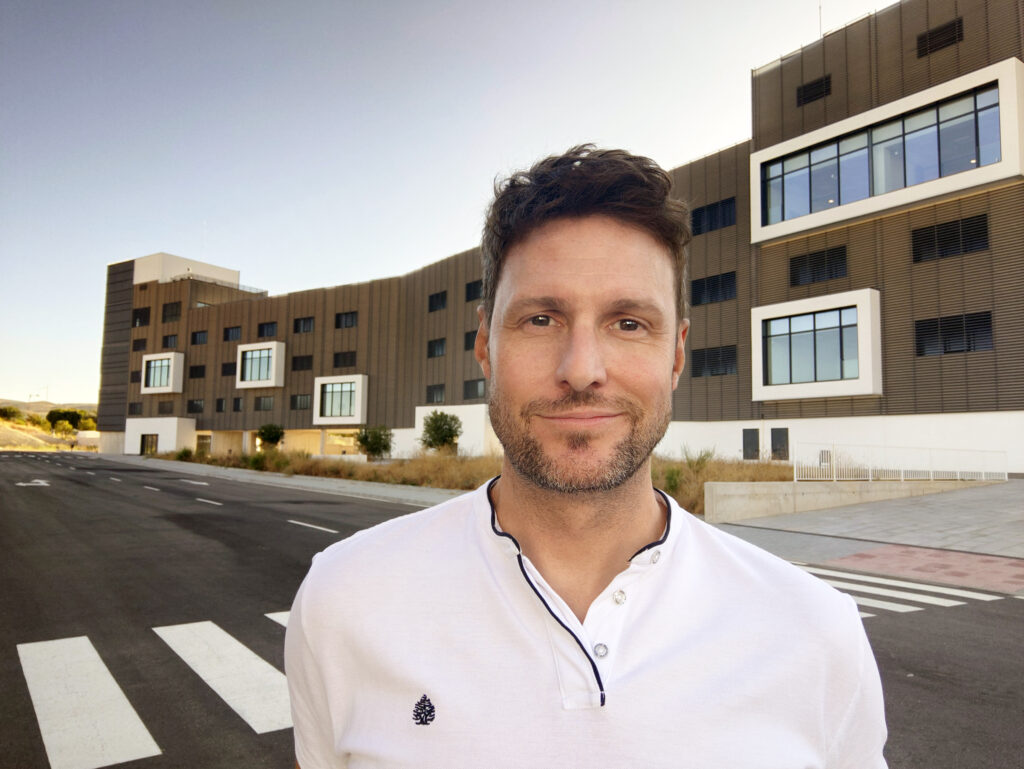
Juanjo Rueda (Granada, Spain) is a civil engineer. He is currently Head of Infrastructure at IFMIF-DONES. One of his main challenges is managing the complexity of integrating all the systems that will form part of the facility into its infrastructure.
– QUESTION (Q): What are your responsibilities as Head of Infrastructure at IFMIF-DONES?
– ANSWER (A): My role is to lead the unit responsible for the commissioning, operation and maintenance of all the infrastructure, equipment and associated services at IFMIF-DONES. The Construction Unit carries out the different facilities and, once they are completed, the Infrastructure Unit takes them over and assumes responsibility for their management throughout their entire service life. This includes buildings, technical installations, utilities, general services and all the systems that enable the facility to operate safely, efficiently and reliably. Our objective is to ensure that the infrastructure is always available so that IFMIF-DONES can fulfil its scientific mission.
– Q: How do you manage the scale of the responsibility you have taken on? We are talking about Spain’s largest scientific infrastructure
– A: I have always understood responsibility as an opportunity for growth, never as a problem. That is why I have approached every responsibility I have taken on throughout my career, including my current role, with enthusiasm, motivation and commitment.
I know these qualities alone do not guarantee success, but they are fundamental tools for tackling any challenge and increasing our chances of achieving our goals. I believe that the attitude with which we approach challenges makes a difference.
The responsibility I have today is undoubtedly very significant, but it is also one of those professional opportunities that are particularly exciting. I therefore take it on with enthusiasm, with the commitment to give my very best and with the motivation to contribute to the success of a project as important as IFMIF-DONES.
– Q: What makes the development and management of IFMIF-DONES’ infrastructure particularly complex?
– A: During the construction phase, the complexity is particularly high due to the need to integrate all the systems that will form part of the facility into its infrastructure. This includes the accelerator systems, lithium systems, remote handling, power, heating, ventilation and air conditioning (HVAC), access control, and many other critical systems and components. In this context, Infrastructure plays a cross-cutting role, as it must continuously interact and coordinate with all the different areas of the project.
Once construction is complete, the complexity does not disappear; rather, it shifts to the operation and maintenance of a unique scientific facility, with very demanding requirements for availability, reliability, and safety. To meet these requirements, all infrastructures and services must operate in a coordinated manner, as an interconnected ecosystem in which each system contributes to the proper functioning of the whole and to fulfilling IFMIF-DONES’ scientific mission.
– Q: What has been the biggest challenge you have faced so far in the project?
– A: Since joining the project, I have had the opportunity to take responsibility for different areas, some of them highly specialised. Among the most significant have been the RAMI (Reliability, Availability, Maintainability and Inspectability) analyses, comprehensive probabilistic studies that make it possible to assess the availability and reliability of different systems. I carried out much of this work during my first two years on the project, during a period spent in Rome that proved to be a very enriching experience, both technically and professionally.
However, if I had to highlight a recent milestone, it would probably be commissioning, outfitting, and relocating the entire international IFMIF-DONES team to the project’s four new buildings. This was an operation involving a high degree of organisational complexity, requiring coordination among numerous areas, users, contractors and suppliers, while ensuring at the same time that the project’s day-to-day activities were affected as little as possible.
Seeing the entire team now working in modern, operational facilities designed to support the project’s future growth is a great source of satisfaction.
– Q: What impact will IFMIF-DONES have on Granada and Spain?
– A: On a personal level, five years ago I was fortunate enough to join the project at a very exciting moment. Since then, I have seen how IFMIF-DONES is already positioning Granada and Spain as international leaders in fusion energy.
The experience of other major scientific and technological infrastructures around the world shows that projects of this kind act as engines of development, generating an ecosystem of companies and services around them that promotes job creation. I am convinced that IFMIF-DONES is already having, and will continue to have, a similar effect, contributing to economic growth and creating new opportunities for Granada, Andalusia and Spain over the coming decades. In addition, the presence in the province of a highly prestigious institution such as the University of Granada, with which there are natural collaborations and synergies, further enhances all of the above.
– Q: Volunteering is also part of your professional career. What does your work with NGOs bring to you?
– A: Volunteering has been an important part of my life, and I have been working with Proyecto Esperanza for the past ten years. I firmly believe that those who have the ability to help, whether by contributing their time, knowledge or effort, also have a responsibility towards others. This is a value that my parents passed on to me through their example and that I have always tried to put into practice.
Moreover, help does not necessarily have to be directed towards people living thousands of kilometres away. We can also make a difference in our immediate surroundings by paying attention to those around us and developing the empathy needed to recognise when someone may need our support, advice or help.
Precisely, one of the main lessons volunteering has taught me is the value of empathy. It reminds you of the importance of people and of the impact that small gestures can have on the lives of others. Seeing how your dedication can contribute, even in a modest way, to improving another person’s situation is enormously rewarding.
These experiences have also helped me become a better listener, understand realities different from my own and put other people’s needs into perspective. I believe these are essential qualities, not only in our personal lives but also in the professional sphere.