“IFMIF-DONES brings enormous value to the future of science and engineering in Spain”
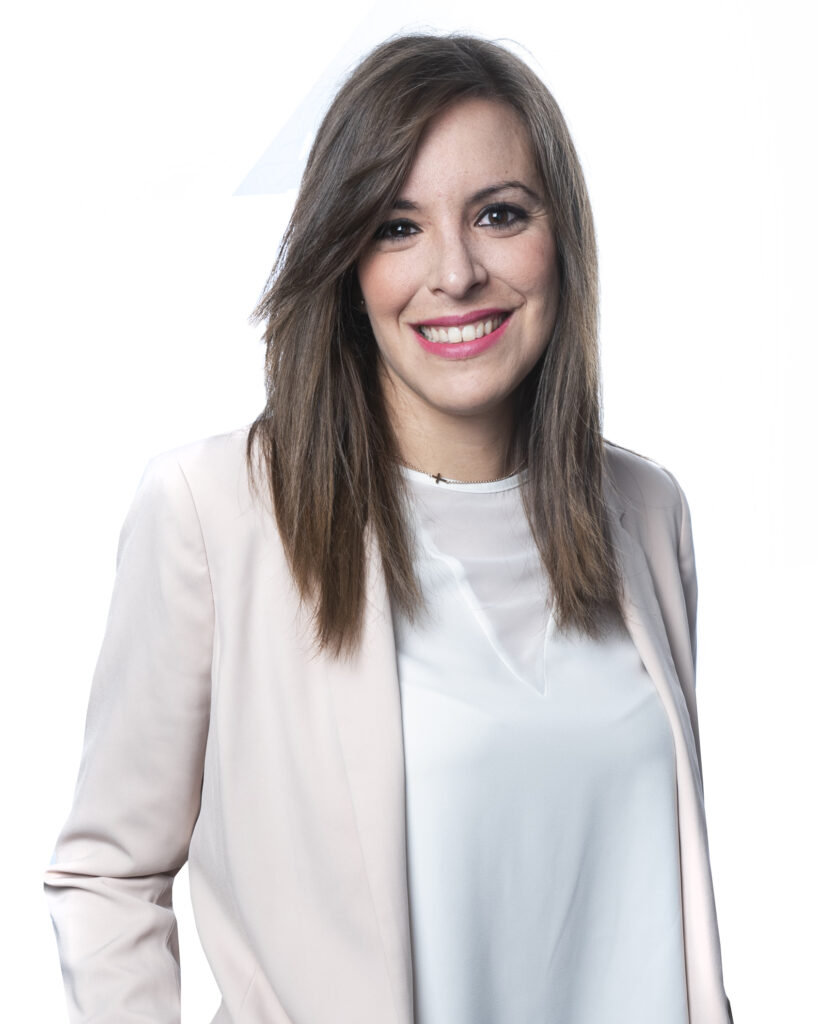
Esther López (Granada, 1985) is a civil engineer. She holds a Master’s Degree in International Leadership from UPM, the Rafael del Pino Foundation and Ferrovial, as well as an MBA from IE Business School. After a solid international professional career, she is currently a Senior Project Manager at IFMIF-DONES.
– QUESTION (Q): You have worked in infrastructure, global logistics and now in fusion science. What do these complex project environments have in common?
– ANSWER (A): Although they may seem like very different sectors, they share similar characteristics in key aspects of their management. Firstly, they require the coordination of multiple stakeholders, from public institutions and suppliers to highly specialised technical teams. In addition, they all involve multidisciplinary collaboration. They also share the need for long-term planning, with roadmaps that combine conceptual phases, design, construction, validation and operation, as well as the management of technical and organisational risks. Finally, in these environments, change management and communication are essential to ensure that complex decisions are made on solid information and that teams move forward coherently.
– Q: Your professional career includes extensive international experience. Does this make it easier to work on such a global project as IFMIF-DONES?
– A: Yes, without a doubt. I believe international experience provides key capabilities for professional development in any sector, and especially in complex environments such as multidisciplinary and global projects like IFMIF-DONES. In the different countries and sectors where I have worked, I have learned to operate in multicultural environments, with diverse regulatory frameworks, working methods and expectations.
– Q: When you were studying civil engineering in Granada, you probably didn’t expect to be part of a leading fusion energy infrastructure. What is your view on the future of Big Science projects in Spain?
– A: When I was studying civil engineering, I had a much more limited perspective and could not imagine all the opportunities that would eventually come my way or how my career would evolve over time. Initiatives such as IFMIF-DONES show that Spain can not only participate in, but also lead complex scientific infrastructures, combining advanced engineering, cutting-edge research and highly specialised management.
If we add to this the institutional commitment to strengthening investment in science and technology, we find a favourable context for Spain to continue consolidating its position as a benchmark in large-scale scientific facilities. That potential is particularly motivating for me to be involved in this project, which brings enormous value to the future of science and engineering in our country.
– Q: Speaking of leadership, your training also includes a master’s degree in international leadership. How do you apply this in your daily work?
– A: In my case, I apply a multicultural approach to decision-making, considering how different perspectives can enrich projects. I also use effective communication tools to facilitate collaboration among diverse teams and ensure that everyone feels heard and aligned. In addition, the master’s programme provided me with techniques to manage change and uncertainty, which is essential in dynamic environments. This translates into fostering flexibility, anticipating needs and promoting a climate of trust within the team.
– Q: IFMIF-DONES has a multidisciplinary team. What are the advantages and disadvantages of this professional environment?
– A: There are many advantages. For example, when facing a problem, we benefit from a more comprehensive perspective. Each discipline and expert brings a different viewpoint: physicists understand scientific and experimental principles, engineers provide technical solutions, and specialists in safety, quality or management help minimise risks and ensure standards. This leads to more robust and effective solutions, which is essential in a project as complex as this.
As for the challenges, effective communication requires more effort, and since different areas have different rhythms and priorities, it is important to align plans and criteria regarding urgency and criticality to avoid slowing down decision-making.
– Q: Do you think initiatives such as “Women in DONES” can serve as a model for other professional sectors?
– A: Yes, I believe initiatives like Women in DONES can be inspiring for other professional sectors. Their main value lies in making female role models visible in highly technological and scientifically demanding fields, which is essential to attract more talent. In addition, they act as a network for support, mentoring and collaboration, fostering both professional and personal development for women in the sector.