‘Women in DONES’ interviews… Pilar Gil
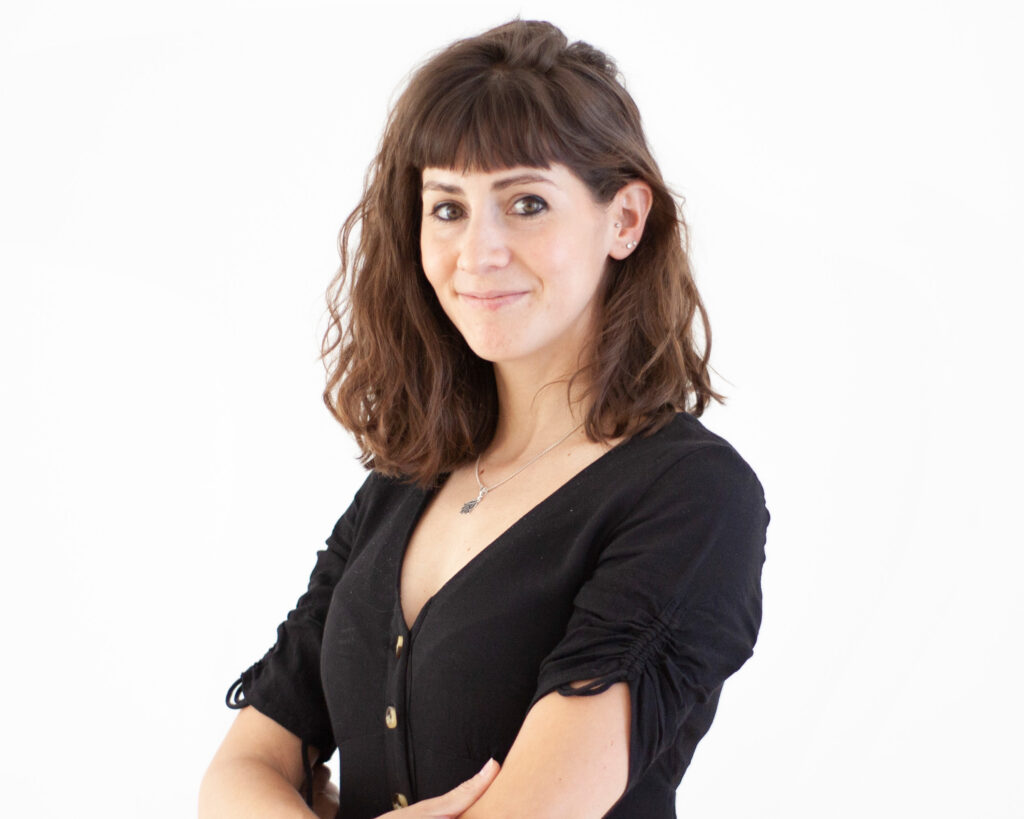
Today, February 11, International Day of Women and Girls in Science, we present today’s interview with Pilar Gil, Head of the Science Department at Safran. Pilar plays a key role within the company, where she is deeply involved in developing cutting-edge technologies for the IFMIF-DONES project, one of the most ambitious scientific and technological initiatives in nuclear fusion.
– QUESTION (Q): What do you do, and what has your background been (education and academic/professional career)?
– ANSWER (A): I am the Manager of the Science Unit (Science Tech) at Safran Spain. My academic background is in Telecommunications Engineering, with a specialisation in medical technology. During my studies, I spent a year in Germany on an Erasmus scholarship and completed my final degree project at UPV–Valencia.
After graduating, given the limited job opportunities in Granada (my hometown) at the time, I decided to move abroad. I worked in Germany for seven years, initially focusing on the energy sector, at companies such as AVU and Gas Natural. Later, I worked at a research centre, GFai, as an embedded software developer for image and audio acquisition and processing systems.
After my experience in Germany, I returned to Spain to join Seven Solutions (now Safran Spain), where I have been working for nine years. I started as an embedded software developer, and I am currently Head of the Science Department at our Granada site.
– Q: Have you experienced or witnessed any difficulty, injustice, or obstacle due to being a woman? Any example you would like to share?
– A: During my career, the main obstacles I faced were in my early years in Germany. More than being related to the fact that I am a woman, they were mainly due to cultural differences between the two countries. That said, these difficulties were resolved quickly, and overall, my experience there was very enriching.
At the beginning of my career, I noticed that my salary was not aligned with that of my male colleagues, and that sometimes I had to be more “insistent” or “serious” to be taken seriously. It is a combination of factors—being a woman, being young, and having responsibilities—but rather than seeing it as an obstacle, I view it as a challenge that helped me grow professionally.
– Q: What motivated you to pursue this field and continue in this area?
– A: Although my professional career began in a different area, focused on energy, I eventually had to decide whether I wanted to continue on a more executive path or return to the technical field I had studied. In the end, I found an excellent balance between both, which has allowed me to fully develop professionally.
What motivates me most in my day-to-day work is that every project is a unique challenge, as we work with cutting-edge technologies such as accelerators, fusion, lasers, astrophysics, and quantum technologies. Each project is an opportunity to learn and to contribute to something truly innovative.
– Q: Looking back, is there anything you would have done differently?
– A: No. I have always believed that the decisions we make along the way lead us exactly to where we are. I am proud of both my successes and my mistakes, as they have all been opportunities for learning and growth. Ultimately, every step has led me to the position I hold today.
– Q: How would you define the current landscape for women in science and technology? Does IFMIF-DONES represent an opportunity for change in this regard? What opportunities does it offer?
– A: I am positively surprised by the number of women currently present in the scientific and technological sector. Although full equality has not yet been achieved, female representation is significant—especially when compared to my experience in Germany, where the ratio was much lower. However, I believe more effort is needed to encourage women to remain in technical roles rather than transition exclusively into project management.
The IFMIF-DONES project, a cutting-edge facility in Granada, Spain, represents a major opportunity to create high-quality jobs in science and technology. It not only opens doors for new generations of women as they finish their studies, but also for those already working in the sector. Moreover, as a long-term project spanning multiple industries, IFMIF-DONES offers opportunities not only within its own facility but also across the entire Spanish scientific sector, which is demonstrating strong success globally.
– Q: What message would you like to share with future female researchers?
– A: I would tell future researchers that the scientific and technological field is full of exciting challenges to solve, and that one of the greatest of these is likely nuclear fusion. If they enjoy tackling challenges in a dynamic, motivating environment, this field is one they should not overlook.
It is also a highly interdisciplinary field, enabling collaboration with chemists, physicists, mechanical engineers, and many other professionals to advance clean energy. What more could you ask for?